How does a solo Rust builder survive against 200 hunters on one server?
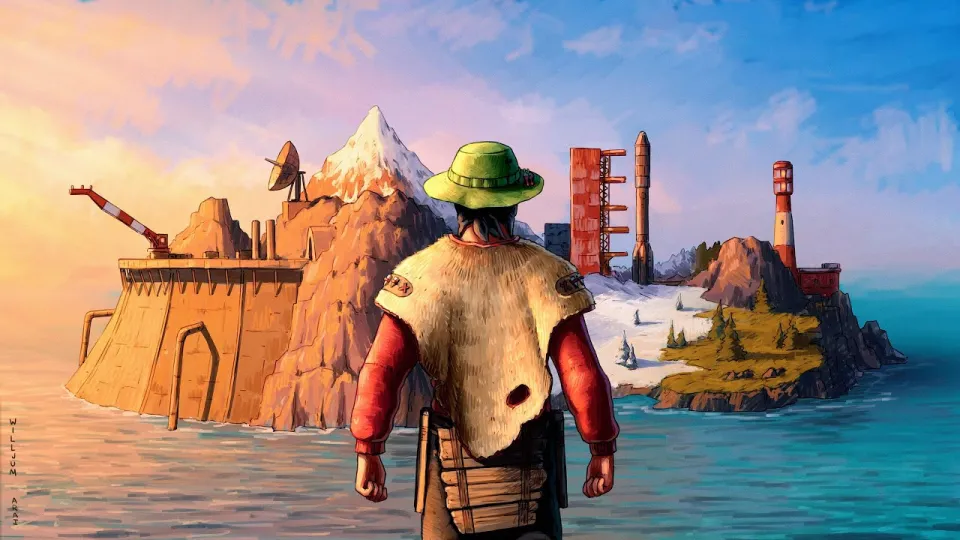
Video: When a Solo Rust builder Vs 200 Hunters...
Need articles like this for your video? They help promote it on YouTube and Google — order them in the Telegram bot @sat_sit_bot. It writes articles around your video, embeds the video and publishes them on popular niche websites (no ads). Your first 50 articles are free.
Key takeaways
- Willjum plays a solo builder against a server-wide hunt of roughly 200 players.
- The format is a departure from his usual solo survival videos, built around one defended base.
- Prep time is the key variable: viewers asked for a 24-hour preparation version of the run.
- Supplies and gear deliveries from other players became a decisive factor in the run.
- The most requested follow-ups are a duo or trio version and a repeat with longer prep.
A solo Rust builder survives a 200-hunter hunt by treating the wipe as a construction and logistics problem rather than a fighting one: pick a defensible spot, build in layers, keep the base cheap to repair and stay mobile enough to avoid being pinned. In Willjum's server-wide event, one builder holds a base while a large part of the population hunts him, and the outcome depends far more on preparation and resource flow than on aim. Support for that kind of long-form experiment comes through Willjum's Patreon page, where viewers back the channel directly.
What the solo builder versus 200 hunters format actually is
The format is a single-player survival scenario scaled up to a server-wide hunt: one builder, one base, and a crowd of hunters whose only job is to find and break it. It is not a standard Rust wipe and not a raid defence clip — the pressure comes from numbers and from the fact that the builder cannot win a straight fight, so every decision has to be about time, distance and material.
A few things define the run:
- One player builds and defends alone, with no clan, no team voice chat and no shared storage.
- The opposing side is effectively the rest of the server, counted in the hundreds of players rather than a raiding group.
- The base is the objective — the hunters win by reaching and destroying it, the builder wins by outlasting them.
- Because the hunter side is disorganised, the real threat is not a coordinated raid but constant probing, scouting and opportunistic pushes.
That asymmetry is what makes the video different from a normal solo survival episode. In a regular wipe a solo player avoids people; here avoidance is impossible, so the builder has to design a base that is annoying to attack and cheap to keep alive.
Why base design decides the run before the first fight
Base design decides the outcome because a solo defender cannot repair fast enough to hold a bad layout against many attackers. Rust bases are judged by cost-to-raid versus cost-to-build, and in a one-versus-many scenario that ratio matters more than raw wall strength.
Practical priorities for a builder in this situation:
- Layer over size. Multiple cheap walls and doors force attackers to spend time and explosives on entry rather than on loot, and each layer buys minutes for the defender.
- Spread the value. Splitting loot, tools and spare kits across small stashes and secondary structures means one breach does not end the run.
- Keep a rebuild kit. Stone, wood, doors and tool cupboard materials stored off-site let the builder restore a wall immediately after a push instead of abandoning the base.
- Control the approach. A location with limited sightlines and one or two natural approaches is worth more than a flat, open field with a bigger footprint.
- Plan the exit. A second door, a jump-down or a hidden route out turns a cornered defence into a repositioning move.
Viewers watching the build phase often read it as the real content of the video, and that is fair: the fights are short, the construction decisions last the whole run.
How a solo player handles a hunt of two hundred
The solo player handles the hunt by refusing to be where the hunters expect, and by converting other players into suppliers instead of enemies. With hundreds of potential attackers, killing everyone is impossible; the only sustainable strategy is to reduce how many people are actively looking.
Three levers make that work:
- Diplomacy. A solo builder who trades, talks and delivers small favours turns some hunters into neutrals. Neutral players do not scout for the crowd.
- Logistics. Gear and rope deliveries from friendly players extend the run far beyond what one player can farm alone — a supply drop is worth more than a kill.
- Tempo. Moving between the base, farming routes and secondary stashes keeps the builder's location uncertain, so the hunt never converges on one grid square.
That combination is why the run reads as a survival story rather than a deathmatch. The moments that stick with viewers are the quiet ones — checking over a shoulder on an empty server, or the sudden jump from a bear sighting to an inventory full of meat — because they show how much of the run is spent managing risk rather than shooting.
The questions viewers ask most about this kind of event
The most common questions after the video are about format, fairness and what a longer preparation phase would change. The audience reaction was strong enough that the creator himself flagged the video as a departure from his usual output, and the comment section filled with requests for variations.
The recurring themes:
- Prep time. A frequent request is a version with a full day of preparation before the hunters are released, to see how far a solo builder can fortify when not rushed.
- Team size. Duo and trio versions came up repeatedly, including pairing the builder with other well-known solo survival creators.
- Series potential. Many viewers want the format repeated with different parameters — different maps, different prep windows, different invited players — rather than a one-off.
- Fairness. Some ask whether hundreds of hunters against one base is even survivable; the answer is that it is survivable only as long as the builder avoids decisive fights and keeps rebuilding.
- The supply run. Deliveries of gear and rope were singled out as the most memorable moment, because they show the social side of Rust that pure raid content usually skips.
For anyone planning a similar event on their own server, the lesson is to fix the rules early: how long the builder has, whether the hunters may team, and whether outside supplies are allowed. Those three settings shape the entire run.
What this run teaches about Rust survival in 2026
This run teaches that Rust survival is a resource and information game before it is a combat game. A solo player with a well-placed base, spare materials and a few neutral contacts can outlast a crowd that has numbers but no coordination.
The transferable habits are simple:
- Build for repair cost, not for looks.
- Store a rebuild kit away from the main base.
- Trade with neighbours early so they have no reason to scout for you.
- Treat every delivery of gear as a strategic win.
- Accept that you will lose structures and plan for it instead of defending everything.
None of this requires a large team, which is exactly why the format resonates with solo players who usually watch clan content from the outside.
Useful links
- Willjum on Patreon — direct support for the channel and its long-form projects.
- Willjum on Twitch — live streams and unedited survival sessions.
- Willjum on Twitter — schedule and server announcements.
- http://creativecommons.org/licenses/by/4.0/ — licence for the Creative Commons music used in the video.
Final thoughts
A solo builder beating a 200-player hunt is not a story about outshooting anyone; it is a story about preparation, base layout and the handful of players who decide to help instead of hunt. The video works because it inverts the usual Rust power fantasy: the underdog does not win by force, but by making the base too expensive in time to bother with. Willjum's channel is the author of this experiment, and it is the place to watch for a repeat, a duo version or a longer preparation window. If you want more formats like this to exist, the Patreon page is where that support goes.
Questions & answers
How many players were hunting the solo builder?
The format pits one builder against a server-wide hunt of roughly 200 players. Because the hunter side is not a coordinated clan, the pressure comes from constant scouting and probing rather than one organised raid on the base.
Would more preparation time change the result?
Viewers repeatedly asked for a version with a full day of preparation, and it would change the balance significantly. Extra hours let a solo player layer walls, stash a rebuild kit off-site and set up secondary structures, which is exactly what a one-versus-many defence needs.
Can a solo player really defend a base against a large group in Rust?
Only by avoiding decisive fights and keeping repair costs low. A solo defender wins on time and material efficiency — layered cheap walls, spread loot and fast rebuilds — not by holding a doorway against a crowd.
Why did gear and rope deliveries matter so much?
A single player cannot farm enough to sustain a long defence alone, so outside supplies effectively double the run's lifespan. Those deliveries also show the social side of Rust, where neutral players choose to help rather than join the hunt.
Source: When a Solo Rust builder Vs 200 Hunters... · Markdown version